If you’re dealing with low water pressure in your house, you already know how frustrating it is. The shower feels more like a mist than a stream, the washing machine takes twice as long to fill, and rinsing dishes becomes a ten-minute exercise in patience. But weak water pressure isn’t just an inconvenience — it can be a warning sign of a bigger plumbing problem hiding inside your walls, under your slab, or somewhere in the municipal supply line running beneath your street.
At First Quality Plumbing, we diagnose and fix water pressure problems across Orange City, Deltona, DeLand, Daytona Beach, New Smyrna Beach, DeBary, and the surrounding communities of Volusia County every single day. In this guide, we’ll walk you through the most common causes of low water pressure in a house, how to troubleshoot the problem step by step, and exactly when it’s time to call a licensed plumber instead of reaching for your wrench.
Need a plumber now? We’re available 24 hours a day, 7 days a week. Call us at 386-775-0909.
What Is Normal Water Pressure for a House?
Before diagnosing low water pressure, it helps to know what normal looks like. Residential water pressure should fall between 40 and 80 PSI (pounds per square inch). The sweet spot for most homes is 60 PSI — strong enough to run multiple fixtures without a drop in flow, but not so high that it stresses your pipes and appliances.
In Volusia County, the municipal water systems serving cities like Orange City, DeLand, and Deltona typically deliver water at 50–70 PSI at the meter. By the time that pressure travels through your home’s plumbing system, it’s normal to lose 5–10 PSI — but anything below 40 PSI at the fixture is considered low water pressure and should be investigated.
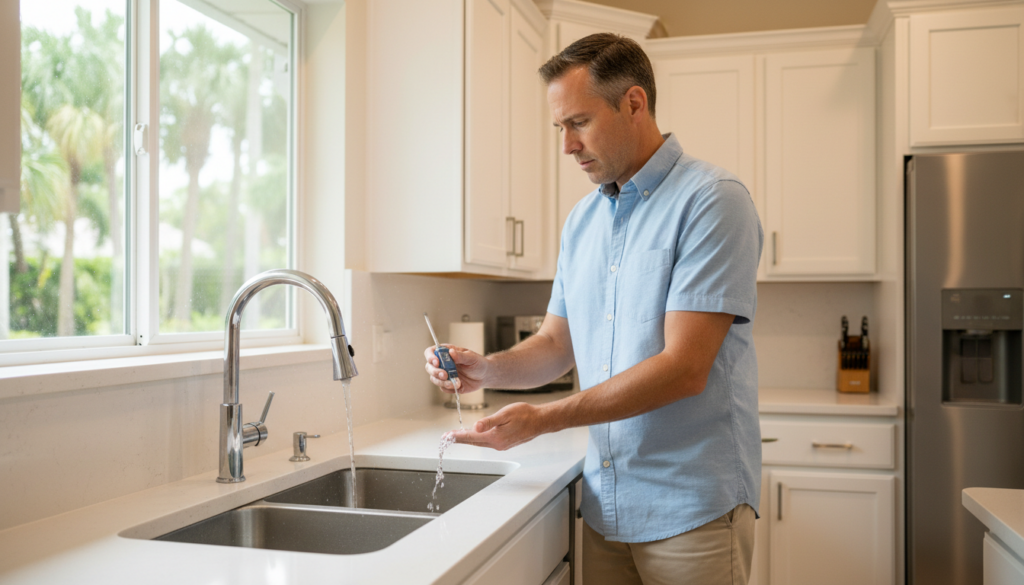
You can check your own water pressure using an inexpensive pressure gauge (available at any hardware store for under $15). Simply attach it to an outdoor hose bib, turn the water on fully, and read the gauge. If you’re seeing readings below 40 PSI consistently, you have a pressure problem worth diagnosing.
Is the Low Pressure Isolated to One Fixture — or Is It the Whole House?
The first question to ask yourself is whether the low pressure affects just one faucet or shower, or your entire home. The answer narrows down the cause dramatically.
- Low pressure at one fixture only → Usually a clogged aerator, showerhead, or a localized supply line issue. Often a quick DIY fix.
- Low pressure in one area of the house (e.g., only the master bathroom) → Could be a partially closed zone valve, a corroded section of pipe, or a hidden leak in that area.
- Low pressure throughout the entire house → Points to a problem at or before the main water meter: a failing pressure regulator valve (PRV), a partially closed main shut-off valve, municipal supply issues, or a significant leak in the main line.
Once you’ve identified the scope of the problem, you can start narrowing down the cause.
8 Most Common Causes of Low Water Pressure in a House
1. Clogged or Dirty Aerator
The aerator is the small mesh screen screwed onto the tip of your faucet. Over time — especially in Central Florida, where hard water is a fact of life — mineral deposits from calcium and magnesium build up on the aerator screen and restrict water flow. If low pressure is limited to one faucet and the rest of the house is fine, a clogged aerator is almost always the culprit.
The fix is simple: unscrew the aerator, soak it in white vinegar for 30 minutes to dissolve mineral buildup, rinse it clean, and reinstall. If the screen is cracked or corroded, replace it (a new aerator costs under $5).
2. Clogged Showerhead
Same principle as the aerator, but on a larger scale. The small holes in your showerhead get clogged with mineral deposits over time, especially in homes that have hard water or haven’t had a water softener installed. Soak the showerhead in white vinegar overnight, or use a commercial descaling product. If soaking doesn’t restore full pressure, replace the showerhead.
3. Partially Closed Main Shut-Off Valve
Your home has a main water shut-off valve — typically located near the water meter, in a utility closet, or on an exterior wall where the water line enters the house. If this valve was recently closed for a repair and wasn’t opened back up fully, it will restrict water flow to your entire plumbing system.
Check that the valve is fully open. On a gate valve (the older wheel-style valve), turn it counterclockwise as far as it will go. On a ball valve (lever-style), the lever should be parallel to the pipe. Knowing where your main shut-off is can save you thousands of dollars in water damage if a pipe ever bursts.
4. Failing Pressure Regulator Valve (PRV)
Most homes in Florida have a pressure regulator valve (PRV) — also called a pressure reducing valve — installed where the main water line enters the home. This device reduces the high pressure coming from the municipal supply line down to a safe level for your home’s pipes.
PRVs typically last 10–15 years. When they fail, they can either let pressure drop too low (causing weak flow throughout the house) or fail in the open position (causing pressure to spike dangerously high). A failing PRV is one of the most common causes of sudden whole-house low water pressure in homes across Orange City, Deltona, and Volusia County — and it almost always requires a licensed plumber to diagnose and replace.
5. Corroded or Clogged Pipes
Homes built before 1980 — and there are tens of thousands of them across DeLand, Orange City, and the older neighborhoods of Deltona — were often plumbed with galvanized steel pipes. Over decades, these pipes corrode from the inside out, creating a buildup of rust and scale that progressively narrows the pipe’s interior diameter and chokes off water flow.
If your home has galvanized pipes and you’re experiencing low water pressure, the solution isn’t a quick fix — it’s whole-home repiping with modern copper or PEX pipe. A repipe completely solves the problem, improves water quality, and adds real value to your home.
6. Water Leaks or Hidden Slab Leaks
A leak anywhere in your plumbing system will cause a drop in pressure because water is escaping before it reaches your fixtures. This is especially true of slab leaks — leaks that occur in the water lines running beneath your home’s concrete foundation — which are unfortunately common in Central Florida due to the region’s soil conditions and the age of many homes.
Signs of a hidden leak include: unexplained increases in your water bill, wet spots on floors or walls, the sound of running water when all fixtures are off, and low water pressure throughout the house. If you suspect a slab leak, don’t wait — contact a licensed plumber immediately. Slab leaks can cause serious structural damage and mold growth if left unaddressed.
7. Municipal Water Supply Issues
Sometimes the problem isn’t your plumbing at all — it’s the city water supply. The Volusia County water system, the City of Orange City utilities, and the Deltona water department all service large distribution networks, and pressure can vary based on time of day, demand, and infrastructure maintenance.
You can check whether a municipal pressure issue is affecting your neighborhood by asking a neighbor if they’re experiencing the same problem. You can also contact your local utility provider directly. If the issue is on the city’s end, they are responsible for addressing it.
8. Water Softener or Filtration System Issues
If your home has a water softener, whole-house filter, or other water treatment equipment, a clogged filter or a malfunctioning softener can significantly reduce water pressure. Check the manufacturer’s maintenance schedule — most whole-house filters need to be replaced every 6–12 months.
Given Central Florida’s notoriously hard water — with many Volusia County municipalities averaging 180–250 ppm of hardness — water softeners are common in area homes and require regular maintenance to perform properly.
Florida-Specific Water Pressure Issues
If you live in Volusia County, Seminole County, or Orange County, there are a few Florida-specific factors that make low water pressure more common here than in other parts of the country:
- Hard water is the norm. Central Florida’s groundwater supply is heavily influenced by the Floridan Aquifer, which passes through limestone formations and picks up calcium, magnesium, and other minerals along the way. That hard water accelerates the buildup of scale inside pipes, aerators, water heaters, and appliances across Volusia County.
- Older housing stock. Cities like DeLand, Orange City, and parts of Daytona Beach have a significant number of homes built in the 1960s and 70s — many of which still have original galvanized steel pipes that are now 50+ years old and actively corroding from the inside.
- Sandy, shifting soils. Florida’s sandy soil and high water table create conditions where pipes — especially those beneath a concrete slab — can shift, settle, and eventually crack, leading to hidden slab leaks that drain pressure and cause structural damage.
- Peak summer irrigation demand. During Florida’s dry season (November–May), irrigation systems run heavily throughout Volusia County. When multiple homes in a neighborhood are watering at the same time, municipal supply pressure can drop noticeably.
Step-by-Step: How to Troubleshoot Low Water Pressure Yourself
Before calling a plumber, run through this checklist to identify whether the fix is a quick DIY job or something that requires professional help:
- Check all fixtures. Is the low pressure limited to one faucet, one area, or the entire house?
- Inspect the main shut-off valve. Make sure it’s fully open.
- Check the water meter valve. There’s a second shut-off valve at the water meter itself — confirm it’s fully open.
- Ask your neighbors. If two or three homes on your street have the same issue, it’s a municipal supply problem — call your utility company.
- Test your water pressure. Attach a gauge to an outdoor hose bib. If you’re below 40 PSI, you have confirmed low pressure.
- Clean the aerators and showerheads. If pressure is low only at certain fixtures, soak the aerator/showerhead in white vinegar.
- Check your water softener or filter. Bypass it temporarily and see if pressure improves.
- Look for signs of leaks. Wet walls, damp floors, unusually high water bills, or the sound of running water when everything’s off all suggest a hidden leak.
If you’ve gone through this checklist and still can’t identify or fix the problem, it’s time to bring in a licensed professional. Call First Quality Plumbing at 386-775-0909 — our team is available 24 hours a day, 7 days a week, and we serve the entire Volusia County area including Orange City, Deltona, DeLand, Daytona Beach, New Smyrna Beach, and DeBary.
DIY Fixes vs. When to Call a Professional Plumber
Safe to DIY:
- Cleaning a clogged aerator or showerhead
- Opening a partially closed shut-off valve
- Replacing a water filter cartridge
- Checking and adjusting your water softener settings
Call a Licensed Plumber For:
- Replacing a failing pressure regulator valve (PRV)
- Diagnosing and repairing corroded or clogged galvanized pipes
- Repiping the home with copper or PEX
- Detecting and repairing hidden or slab leaks
- Investigating unexplained whole-house pressure drops
- Any work involving the main water line or meter
Don’t let a guessing game turn into expensive water damage. First Quality Plumbing serves Orange City and all of Volusia County with upfront pricing and no-surprise billing. Call 386-775-0909 any time, day or night.
Frequently Asked Questions: Low Water Pressure in a House
What causes low water pressure in a house?
The most common causes include clogged aerators or showerheads, a partially closed shut-off valve, a failing pressure regulator valve (PRV), corroded galvanized pipes, hidden water leaks or slab leaks, municipal supply pressure issues, and clogged whole-house water filters. In Central Florida, hard water mineral buildup is an especially common contributor.
Why is the water pressure low only in my house and not my neighbors’?
If neighboring homes have normal pressure, the problem is inside your home’s plumbing — not the municipal supply. Check your main shut-off valve, pressure regulator, aerators, and look for signs of a hidden leak. A whole-house issue that doesn’t affect neighbors almost always points to the PRV, main valve, or internal pipe condition.
How do I fix low water pressure in my house?
Start by identifying the scope: is it one fixture or the whole house? For a single fixture, clean the aerator or showerhead. For whole-house pressure, check the main shut-off and water meter valves, test the water pressure with a gauge, and inspect your PRV. If those checks don’t reveal the issue, call a licensed plumber to inspect for corroded pipes or hidden leaks.
What is a normal water pressure for a residential home?
Normal residential water pressure is 40–80 PSI. Most plumbers recommend 60 PSI as the ideal sweet spot. Anything below 40 PSI is considered low pressure and should be investigated. Anything above 80 PSI is dangerously high and can damage pipes, appliances, and fixtures over time.
When should I call a plumber for low water pressure?
Call a licensed plumber if: the pressure issue affects your whole house, you’ve already checked the shut-off valves and aerators without success, you notice a sudden unexplained pressure drop, your water bill has increased, you see wet spots or hear running water when fixtures are off, or your home has older galvanized pipes. These are signs of a more serious underlying problem.
Can low water pressure damage my appliances?
Yes. Many modern appliances — dishwashers, washing machines, tankless water heaters, and refrigerator ice makers — require a minimum water pressure (typically 20–40 PSI) to function properly. Chronically low pressure can cause appliances to underperform, cycle improperly, or fail prematurely. It can also affect the performance of your water softener and whole-house filtration system.
Why is my hot water pressure low but cold water pressure is fine?
This typically points to the water heater. Possible causes include: a partially closed shut-off valve on the cold water inlet to the water heater, a failed dip tube inside the tank, sediment buildup at the bottom of a traditional tank water heater restricting output, or a failing pressure and temperature relief valve. A water heater service call can usually diagnose and fix this quickly.
What is a pressure regulator valve (PRV) and do I need one?
A pressure regulator valve (PRV) is a small, bell-shaped device installed on your main water line where it enters your home. It reduces the high incoming pressure from the municipal supply (which can run 100+ PSI) to a safe residential level (typically 50–60 PSI). Florida building codes require PRVs in most new construction. If your home was built before the 1980s and has never had a PRV inspected, it’s worth having a plumber check it.
Why did my water pressure suddenly drop?
A sudden pressure drop usually signals one of three things: a main shut-off valve that moved (perhaps during a service visit), a PRV that has just failed, or an active leak somewhere in the system. If you notice a sudden, unexplained pressure drop, turn off water-intensive appliances and check for any visible signs of leaks. If you find none, call a plumber immediately.
How do I increase water pressure in my house?
After ruling out clogged fixtures and ensuring all valves are fully open, the most reliable way to increase whole-house water pressure is to have a plumber adjust or replace the PRV. If your current PRV is set too low, a simple adjustment can immediately boost pressure. If the pipes themselves are the problem (corroded galvanized), repiping is the permanent solution.
Does low water pressure mean I have a leak?
Not always — but a hidden leak is one of the most serious causes of unexplained low pressure, so it should always be on your suspect list. If you can’t identify a simpler cause (closed valve, dirty aerator, failing PRV), and especially if your water bill has increased, a leak is likely. A plumber can use pressure testing and leak detection equipment to confirm.
Why is water pressure low in only one room?
Low pressure isolated to one room can indicate a partially closed zone valve for that area, a corroded section of pipe supplying that room, or a small leak in the supply line feeding that space. Check that no valves under the sink or behind the toilet have been accidentally turned.
What causes low water pressure in the whole house?
Whole-house low pressure usually means the problem is at or before the point where water enters your home. The most common culprits are: a partially closed main shut-off or meter valve, a failing or maladjusted PRV, severe pipe corrosion throughout the home, a significant leak in the main supply line, or a reduction in municipal supply pressure serving your neighborhood.
How do I check water pressure myself at home?
Purchase a water pressure gauge at any hardware store (under $15). Connect it to an outdoor hose bib with no other water running in the house. Turn the hose bib on fully and read the gauge. A reading of 40–80 PSI is normal. Take the reading at different times of day to check whether peak demand hours are a factor.
Why is my water pressure low when my sprinklers are running?
Irrigation systems draw a significant volume of water when they run — sometimes 10–20 gallons per minute for a medium-sized yard in Florida. If your home’s supply line and PRV can’t handle that combined demand alongside interior fixtures, pressure will drop while the sprinklers are active. Upgrading your PRV or supply line sizing may be needed if this is a persistent issue.
Who should I call for low water pressure in Orange City or Volusia County, FL?
Call First Quality Plumbing at 386-775-0909. We’re a licensed Florida plumbing contractor (CFC050566) serving Orange City, DeLand, Deltona, Daytona Beach, New Smyrna Beach, DeBary, and all of Volusia County. We’re available 24/7 — including nights, weekends, and holidays.
First Quality Plumbing: Serving Volusia County 24/7
Whether your low water pressure stems from a simple clogged aerator or a more serious issue like a failing PRV, corroded pipes, or a hidden slab leak, the team at First Quality Plumbing has the tools, training, and experience to diagnose it fast and fix it right the first time. We serve homeowners and businesses throughout Orange City, Deltona, DeLand, Daytona Beach, New Smyrna Beach, DeBary, and all surrounding communities in Volusia County, Seminole County, and Orange County, FL.
We operate 24 hours a day, 7 days a week — because plumbing problems don’t keep business hours. Call us any time at 386-775-0909 to schedule a diagnostic visit or request emergency service.
- ✅ Licensed Florida Plumbing Contractor — CFC050566
- ✅ 24/7 Emergency Service Available
- ✅ Upfront, Transparent Pricing — No Surprise Bills
- ✅ Serving Orange City, Deltona, DeLand, Daytona Beach & All of Volusia County

Christopher Evers is part of the team at First Quality Plumbing & Irrigation Inc., a trusted Florida plumbing company serving residential and commercial customers with professional plumbing repair, installation, and maintenance services. First Quality Plumbing operates under Florida Certified Plumbing Contractor License CFC050566, which is listed as current and active with the Florida Department of Business & Professional Regulation. Christopher is committed to helping customers receive honest guidance, quality workmanship, and dependable plumbing solutions throughout Central Florida.